


-

Half-yearly Summary of Acrylic Lotion Rising in the First Half and Falling in the Second, with Potential for Low Volatility in the Second Half
In the first half of 2026, the acrylic lotion market exhibited a trend of initial increase followed by a decline. Affected by the events in the Middle East in March, raw material prices rose strongly, driving up lotion prices, with the monthly average exceeding the average over the past five year...Read more -

Styrene acrylic emulsion
Styrene acrylic emulsion, commonly known as styrene-acrylic emulsion, is an aqueous emulsion formed by copolymerizing styrene and acrylate monomers. It is mainly used as a film-forming substance in water-based architectural coatings. Due to its high cost-effectiveness an...Read more -
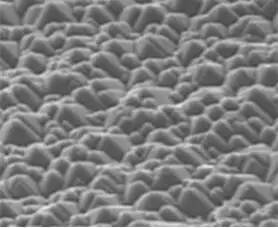
Dispersant for cutting gold and steel wire saws
Diamond wire cutting technology is also known as consolidation abrasive cutting technology. It is the use of electroplating or resin bonding method of diamond abrasive consolidated on the surface of steel wire, diamond wire directly acting on the surface of silicon rod or silicon ingot to produce...Read more -
Dispersant
Dispersant (Dispersant) is an interface active agent with two opposite properties, both lipophilic and hydrophilic. The solid and liquid particles that are difficult to dissolve in liquid, can also prevent the settlement and condensation of the particles and form the amphiphilic reagent needed fo...Read more -

defoaming agents
Product Introduction : Defoaming agent is a kind of defoaming agent compounded by a special process. Features: widely used in the manufacturing process of all kinds of adhesives used in the adhesive system of defoaming agent, easy to disperse, easy to use. In a wide range of pH and temperature w...Read more -
Types and functions of dispersants commonly used in coatings.
Dispersant is also called wetting and dispersing agent. On the one hand, it has wetting effect, on the other hand, one end of its active group can be adsorbed on the surface of pigment crushed into fine particles, and the other end is solventized into the base material to form adsorption layer (t...Read more -
Water-based coating defoamer, improve the performance of water-based coatings so simple
Due to the relatively low VOC content of water-based coatings, they are becoming more and more popular among consumers. However, for some water-based paints, we will find that if not treated in time, it is easy to produce bubble holes and fish eyes, but some will not. What is the mystery in the m...Read more -
The specific use of dispersants
Dispersants are also surfactants. There are anionic, cationic, nonionic, amphoteric and polymeric types. The anionic type is used a lot. Dispersing agents are suitable for powders or caking that are susceptible to moisture and can be added to effectively loosen and prevent caking without affectin...Read more -
The importance of using the correct thickener for waterborne coatings and some lessons learned
As the viscosity of water-based resin is very low, it cannot meet the needs of storage and construction performance of the coating, so it is necessary to use suitable thickener to adjust the viscosity of water-based coating to the correct state. There are many varieties of thickeners. When select...Read more -
How to choose substrate wetting agent for water-based paint?
In water-based paints, emulsions, thickeners, dispersants, solvents, leveling agents can reduce the surface tension of the paint, and when these reductions are not enough, you can choose a substrate wetting agent. Please note that a good choice of substrate wetting agent can improve the leveling ...Read more -
Wetting agent
The function of wetting agent is to make solid materials more easily wetted by water. By reducing its surface tension or interfacial tension, water can expand on the surface of solid materials or penetrate into the surface, so as to wet solid materials. Wetting agent is a surfactant that can make...Read more -
dispersant
Dispersant is an interfacial active agent with two opposite properties of lipophilicity and hydrophilicity within the molecule. Dispersion refers to the mixture formed by the dispersion of one substance (or several substances) into another substance in the form of particles. Dispersants can unifo...Read more
