


Defoamers can be classified into five categories for troubleshooting in the entire process of production, storage, and construction: insufficient defoaming, excessive defoaming, abnormal storage, defects in construction paint film, and compatibility conflicts.

1、 Foam is not eliminated cleanly and bubbles continuously (defoaming failure)
phenomenon
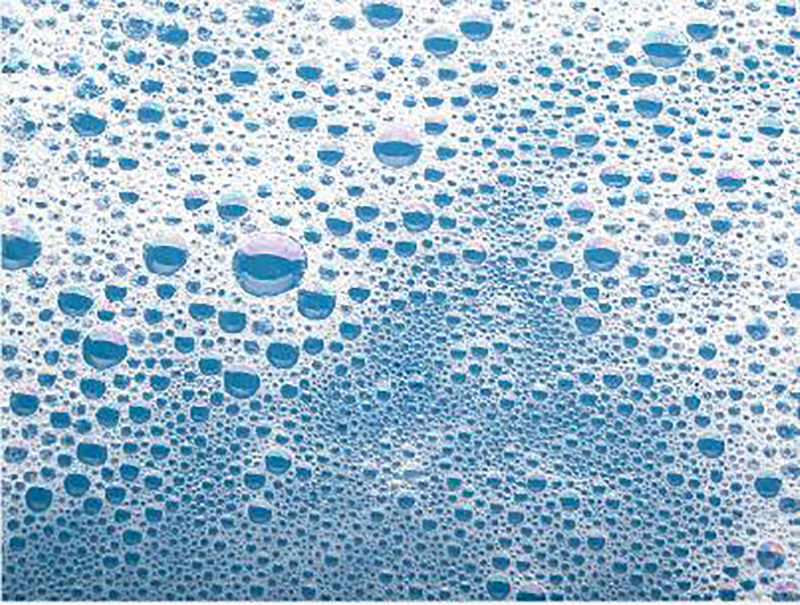
Grind/adjust the paint to fill the can with fine bubbles, let it stand for floating bubbles, roll coat and spray to fill the board with bubbles, paint film pinholes and volcanic craters, repeated bubbling cannot eliminate them.
Core reason
The time of adding is too late, and a large amount of stable foam is added after it is generated, so the defoamer cannot break through the thick foam film;
The selection of defoamers is not matched. Mineral oil defoamers are used for high gloss systems and ordinary polyether silicon to resist high surface active color pastes;
The stirring speed is too high, continuously introducing new air to counteract the defoaming effect;
Excessive activity of wetting agents, dispersants, and colorants in the system can cause emulsification and damage to defoamer molecules;
The total amount of defoamer added is insufficient, and the proportion of segmented addition is unbalanced (too little defoamer was added in the early stage);
High solid content and thick paste coatings have high viscosity, which hinders the upward movement of bubbles.
Solution
Perform three-stage addition: add 40%~50% foam suppression in the early stage of grinding, 30%~40% in the middle stage of paint adjustment, and add 10%~20% before the finished product;
Change the compatible model: choose strong anti foaming organic silicon defoamer for high gloss active system, and low silicon compatible type for high gloss varnish;
The stirring speed should be controlled between 500-800r/min, and the high-speed dispersion and defoaming stage above 1000r/min is prohibited;
Reduce the dosage of dispersing/wetting agents and replace low surface active concentrated colorants;
The total amount of ordinary coatings is increased to 0.2%~0.35%, and the upper limit of high solid content systems is 0.8% (not exceeding 1%);
After production is completed, let it stand for 5-10 minutes to allow the microbubbles to naturally float and rupture.
2、 Excessive addition of defoamer: shrinkage, fisheye, oil stains, loss of gloss
phenomenon
The paint film has circular depressions and shrinkage cavities, floating oil spots on the surface, significantly reduced gloss, matte paint peeling, and decreased adhesion.
Core reason
Blindly adding too much, exceeding the tolerance limit of the system;
The high viscosity defoamer is directly fed without dilution, and the local concentration is too high;
Excessive use of organosilicon defoamer causes silicone oil to migrate to the surface of the paint film, forming a barrier layer;
One time batch input, without adding small amounts in batches.
Solution
Formula remedy: Add a small amount of wetting dispersant, ethylene glycol/propylene glycol solvent, and dilute the concentration of silicone oil;
Production standard: Defoamer should be slowly added in multiple drops, and the paint film status should be observed by stirring and testing the plate with each addition;
Dilute the high viscosity defoamer with water at a ratio of 1:2~1:5 in advance and add it at low speed along the tank wall;
High gloss topcoat with priority for low addition amount, controlling the total addition amount to ≤ 0.25%;
If the shrinkage cavity is serious, supplement the basic lotion, pigments and fillers in proportion to dilute the concentration of the whole system.
3、 Coating storage layering, floating oil, and floating oil droplets on the tank surface
phenomenon
The finished product should be stored for 1-7 days, with a light yellow oil layer floating on the upper layer and a thick coating on the lower layer. After stirring, it should be re layered in a short period of time.
Core reason
Defoamer has poor compatibility with lotion and resin, and organosilicon/mineral oil cannot be stably dispersed;
If the diluted defoamer is placed for too long, the lotion will demulsify and release silicone oil;
The system lacks matching wetting agents and cannot emulsify hydrophobic components of defoamers;
The amount of defoamer added exceeds the limit and exceeds the system’s carrying capacity.
Solution
Replace the polyether modified silicone defoamer with a more compatible one and stop using pure mineral oil defoamers;
Diluted defoamers should be prepared and used immediately, and should not be stored for more than 2 hours;
Slightly increase the dosage of non-ionic wetting agents to enhance the emulsion encapsulation of defoamers;
Reduce the total amount of defoamer added and mix a small amount of HASE thickening to enhance the system’s encapsulation strength;
Before switching between new and old defoamers, conduct a 7-day thermal storage stability test on a 500g sample.
4、 After construction, there are pinholes, pockmarks, and bubble holes in the paint film
phenomenon
After rolling/spraying and drying, the surface is densely covered with small holes and depressions, and the holes are more obvious when thick coating with rough paint.

Core reason
During the production stage, microbubbles are not completely eliminated, and during film formation, water evaporates and bubbles break through the paint film;
High pressure air was drawn into the secondary bubbles during spraying, and a small amount of defoaming was not added before construction;
Abnormal environmental temperature and humidity: rapid drying at high temperatures, with no time for bubbles to escape; Slow evaporation of high humidity moisture and retention of bubbles;
The viscosity of the thickener is too high, and bubbles are trapped inside the paint film and cannot float up.
Solution
Add an additional 0.05% to 0.1% defoamer before spraying construction, stir evenly before machine operation;
Control the construction environment temperature to 15-30 ℃ and humidity to 40% -70%, avoiding high temperature construction at noon;
Reduce the viscosity of the KU system appropriately and increase the upward velocity of bubbles;
Thick textured paint combined with high anti foaming composite defoamer, with an increased proportion added in the early stage during the grinding stage.
5、 After stirring, a large amount of foam will form for the second time, and the more foam is stirred, the more foam will form
phenomenon
After adding defoamer and stirring, the foam will increase instead, and will not subside after standing for a long time.
Core reason
The stirring blade runs at high speed, collides with the tank wall, and the liquid surface rolls, continuously enveloping in air;
Mixing time is too long, and shear force disrupts the dispersion state of defoamers;
The selection of defoamer was incorrect, and a stable foaming agent was chosen.
Solution
Fixed speed of 500-800r/min during the defoaming stage, stirring for 3-5 minutes and immediately stopping the machine;
Keep the stirring blade working below the liquid level to reduce liquid level rolling;
After mixing, let it stand for 5-10 minutes before sampling and filling;
Replace the foam suppression and degassing dual function defoaming product.
6、 The defoaming effect of new and old batches of coatings is unstable, and there is a large difference between batches
phenomenon
With the same formula and the same amount of defoaming agent added, one batch is completely defoamed and the other batch is filled with bubbles or shrinkage holes.
Core reason
The surface active content of color paste, lotion and dispersant batch fluctuates, which destroys the defoaming balance;
The production feeding sequence is chaotic, and the pH of the system changes significantly when defoamers are added;
Temperature fluctuations during storage can cause premature failure of defoamers due to high temperatures;
The dilution ratio and stirring speed of the defoamer are not consistent among the operators.
Solution
Conduct compatibility sample testing on each batch of raw materials upon arrival at the factory;
Standardized feeding process for solidification, strict three-stage defoaming addition;
The finished product should be stored at a constant temperature of 5-35 ℃, avoiding direct sunlight and low-temperature freezing storage in winter;
Unified defoaming dilution ratio, stirring speed, and stirring duration operation specifications.
7、 The use of a new defoamer results in extensive shrinkage and discoloration
phenomenon
After changing the defoamer model, the paint film formed flakes with shrinkage holes, and the matte paint had color differences and flowers.
Core reason
The molecular structure of new and old defoamers is different, which conflicts with the compatibility of original wetting, dispersion and lotion; Directly producing without conducting small-scale trials.
Solution
The new defoamer must first undergo a 500g test: observe immediate defoaming, 24-hour storage layering, and the appearance of the paint film on the board;
Alternating transition between new and old defoamers, using a mixture in a gradient of 3:7, 5:5, and 7:3, gradually replacing them;
When shrinkage occurs in the small-scale test, the amount of wetting agent and propylene glycol solvent should be adjusted synchronously to improve compatibility.
8、 The defoaming effect drops sharply in low-temperature environments (winter production/construction)
phenomenon
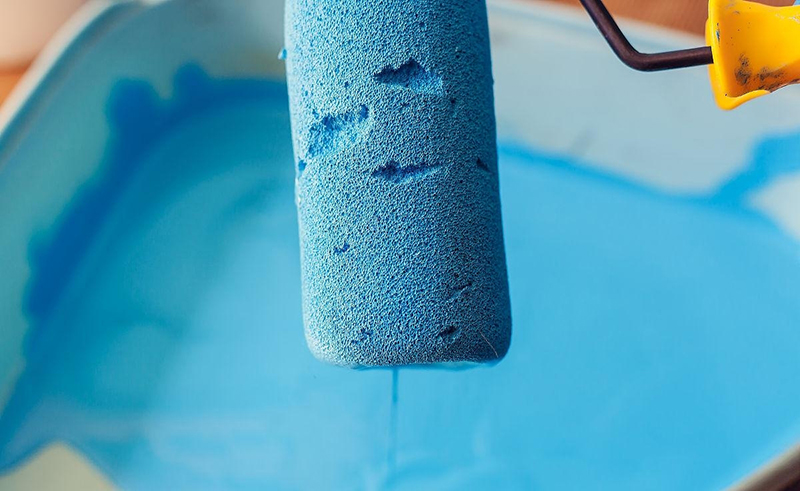
When the temperature is below 10 ℃, the defoaming rate slows down significantly, and fine bubbles remain in the system for a long time.
Core reason
At low temperatures, the viscosity of defoamers increases, the molecular motion activity decreases, and the ability to break bubbles weakens; With the increase of viscosity of lotion system, the resistance of bubble floatation increases.
Solution
Heat the defoamer and coating materials to around 20 ℃ in advance during winter before feeding;
Select low-temperature resistant polyether organosilicon defoamer to avoid defoaming with pure mineral oil;
Slightly increase the proportion of defoaming added during the grinding stage to enhance the low-temperature defoaming ability;
Extend the static defoaming time to 10-15 minutes before filling.
9、 Conflict between defoamers and thickeners, resulting in decreased viscosity and water separation
phenomenon
After adding defoamers, the viscosity of the coating KU significantly decreases, and it is prone to delamination and settling during storage.
Core reason
Organic silicone defoamers disrupt the polyurethane HEUR binding network, while hydrophobic silicone oils seize the binding sites; A large amount of mineral oil dilutes and thickens molecules.
Solution
Composite use of HEC cellulose to stabilize low shear viscosity and counteract the damage of defoaming to polyurethane;
Add in sequence: first add defoamer and stir evenly, and finally add thickening agent at low speed;
Select low interference polyether modified defoamers to reduce damage to HEUR;
After the viscosity drops, add a small amount of thickening agent in batches for fine-tuning.
10、 Reduced water resistance and adhesion of paint film (residual effects of excessive defoaming)
phenomenon
After soaking in water, the paint film turns white and peels off, and the paint falls off during the 100 grid test.
Core reason
Excessive silicone oil/mineral oil migrates to the surface of the paint film, forming a hydrophobic isolation layer that reduces the adhesion between the paint film and the substrate, as well as between the paint film layers.
Solution
Strictly control the upper limit of defoaming, and the total amount of high gloss topcoat added should not exceed 0.3%;
Reduce the proportion of pure silicone defoamers and combine them with polyether composite defoamers;
Extend the drying time during the baking/curing stage of the paint film to allow small molecule defoamers to evaporate;
The proper amount in the formula increases the solid content of lotion and enhances the film forming compactness of the paint film.
General rapid troubleshooting process
Serious foaming: Check the timing of addition → increase the defoaming ratio of the grinding section → reduce the stirring speed;
Shrinkage oil spots: Immediately stop adding defoamers → add wetting/solvent diluted silicone oil concentration;
Storage layering: Conduct compatibility tests → Change defoaming models → Reduce the total amount of additives;
Pinholes and pockmarks: Add a small amount of defoaming before construction → adjust temperature and humidity → extend the static defoaming time;
Viscosity collapse: Adjust the feeding sequence (defoaming first, thickening later) → Stabilize the rheology of composite cellulose
Post time: Jul-21-2026