


Traditional anti-corrosion coatings achieve passive protection through physical barriers, cathodic protection, and corrosion inhibition. However, they generally have shortcomings such as high brittleness, susceptibility to microcracks, rapid failure of protection after damage, and inability to predict corrosion risks. Modification research continuously improves the barrier properties, mechanical properties, and long-term corrosion resistance of coatings through matrix structure optimization, nano filler composite, organic-inorganic hybridization, and other means; The development of intelligence promotes the transformation of anti-corrosion coatings from “passive barrier protection” to a perception response self repair warning active intelligent protection system. The integration of the two, combined with digitalization and AI intelligent manufacturing, has become the core development direction in the fields of ocean engineering, oil and gas equipment, wind power, steel structures, and corrosion protection for rail transit.

1、 Research progress on mainstream modification of anti-corrosion coatings
The core goal of modification is to improve the inherent defects of the resin matrix, construct dense barrier channels, enhance resistance to media, weather, and mechanical damage. It is divided into four routes: matrix modification, filler composite modification, organic-inorganic hybrid modification, and bio based environmental protection modification.
1. Chemical modification of resin matrix
Molecular structure design for mainstream film-forming resins such as epoxy, polyurethane, acrylic, and organosilicon:
Epoxy resin modified pure epoxy resin has high brittleness and internal stress after crosslinking, and is prone to forming micropores. By expanding flexible chain segments, hydrogenation modification, organic silicon grafting, and introducing dynamic covalent bonds, the internal stress during curing is reduced, and toughness and moisture resistance are improved; Introducing hydrophobic groups to reduce the permeation rate of water and chloride ions.
Polyurethane modification improves the hydrolysis resistance, wear resistance, and UV resistance of coatings by regulating the ratio of soft and hard segments and copolymerizing organic silicon; Constructing reversible hydrogen bonds and disulfide bonds to provide a molecular basis for intrinsic self-healing coatings.
Organic silicon/fluororesin modification utilizes the excellent weather resistance and hydrophobic properties of Si-O and C-F bonds to graft modify acrylic acid and epoxy, preparing low surface energy anti fouling and anti-corrosion integrated coatings suitable for marine atmosphere and coastal steel structures.
2. Nano filler composite modification (current research hotspot)
Adding functional nano fillers to the resin system to construct a maze barrier effect and block the diffusion channels of corrosive media:
Graphene/Graphene Oxide (GO): Two dimensional layers form a “maze barrier” that significantly prolongs the chloride ion permeation pathway; Functional modification solves the problem of reunion. A small amount of doping can significantly improve the salt spray life; Collaborate with zinc powder to reduce the amount of zinc powder used in zinc rich coatings. Pain point: Improper use of conductive properties can easily cause local galvanic corrosion.
Two dimensional layered materials: hydrotalcite (LDH), zirconium phosphate, montmorillonite, with ion exchange ability, can capture corrosive Cl ⁻, and can also serve as corrosion inhibitor carriers.
Oxide nanoparticles: Nano TiO ₂, SiO ₂, Al ₂ O3, fill the cured micropores of the coating, improve density, hardness, and UV aging resistance.
Limitations: Nanofillers are prone to aggregation; Poor interface compatibility requires surface coupling agent modification, which hinders large-scale industrialization.
3. Organic inorganic hybrid modification
Organic silicon hybrid coating was prepared by sol-gel method, combining the advantages of high toughness of organic materials and high corrosion resistance and heat resistance of inorganic materials. Hybrid networks reduce phase separation and shrinkage pores during curing, and are widely used in heavy-duty and high-temperature anti-corrosion systems. They are an important technical route for water-based high-performance anti-corrosion coatings.
4. Environmentally friendly biobased modification
In response to the trend of VOC control, low VOC, biodegradable anti-corrosion coatings are developed by modifying epoxy resin and water-based acrylic acid with biomass materials such as soybean oil, flaxseed oil, lignin, and tannins; At the same time, biomass components can also have natural corrosion inhibition functions, which is an important direction for green coatings.
2、 Intelligent development of anti-corrosion coatings (intelligent anti-corrosion coatings)
Definition of intelligent anti-corrosion coating: It can autonomously perceive corrosion hazards under environmental stimuli and respond (color change warning, release corrosion inhibitors, repair cracks) to achieve active protection. It is mainly divided into three directions: self-healing coatings, corrosion warning sensing coatings, and multi stimulus responsive intelligent coatings.
1. Self repairing anti-corrosion coating (the most mature research)
(1) Exogenous self-healing (microcapsule/nanocontainer system)
Encapsulate repair agents (dry oil, resin monomers) and corrosion inhibitors (benzotriazole, 8-hydroxyquinoline) in microcapsules, mesoporous silica, and layered double hydroxide nanocontainers. When the coating is scratched or broken, the capsule ruptures and releases repair agent to seal the crack; Or corrosion can trigger pH, Fe ² ⁺, Cl ⁻ stimulation, and selectively release corrosion inhibitors to inhibit metal electrochemical corrosion. Typical systems: BTA @ mesoporous silicon/epoxy composite coating, corrosion inhibitor intercalated LDH composite coating.

(2) Intrinsic self repair
By relying on the dynamic reversible chemical bonds (hydrogen bonds, disulfide bonds, Diels Alder bonds) of the polymer itself, molecular chains can recombine under heating, light, and water environment stimulation, achieving self-healing of cracks without the need for additional encapsulation capsules; Advantages: Can be repaired multiple times, disadvantages: There are limitations on the repair conditions.
2. Corrosion self warning/visual sensing coating
Visual identification of early corrosion hazards:
Color display type: Corrosion produces Fe ³ ⁺, pH changes, indicator chelates color, fluorescence color changes, and visible damage location with the naked eye;
Electrochemical sensing type: doped conductive fillers (carbon nanotubes, graphene), with changes in resistance and electrochemical impedance when the coating is locally damaged, combined with the Internet of Things to achieve remote signal warning; Suitable for steel structures such as large bridges, storage tanks, and offshore wind power that are difficult to manually inspect on a regular basis.
3. Integrated intelligent coating with multiple stimulus responses
Frontier research direction: Simultaneously integrating warning, corrosion inhibition release, self-healing, and superhydrophobic functions. For example, chloride ion responsive nanocontainers, chloride ion invasion → release of corrosion inhibitors to inhibit corrosion, while fluorescent color warning; Cooperate with dynamic key resin to achieve crack repair and build a multifunctional integrated intelligent protection system.
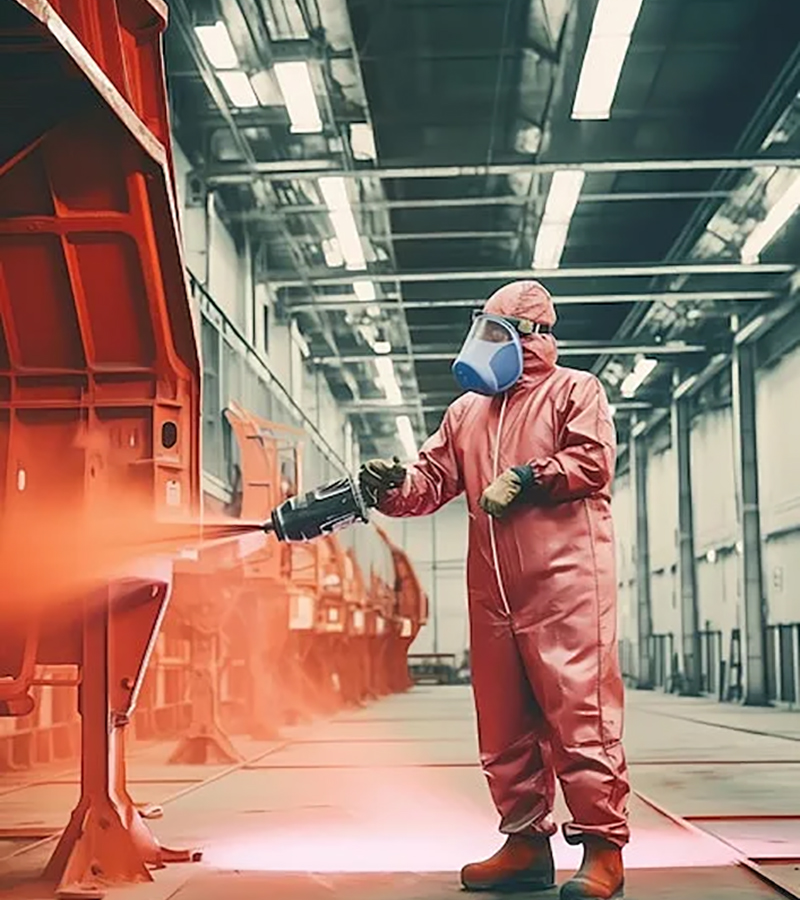
3、 At the level of the industrial chain: Intelligent manufacturing and operation of the coating industry
In addition to the intelligentization of coating materials themselves, the entire chain is being digitized and promoted synchronously
4、 Currently facing key bottlenecks
- The cost of preparing intelligent fillers, functionalized graphene, and nanocontainers at the material level is relatively high; Most intelligent coating laboratories have excellent performance, but their long-term stability under seawater and humid heat aging is insufficient; When multiple functions are combined, there is mutual interference between components.
- Microcapsules and nano fillers have a significant impact on the rheological properties of coatings during construction and industrialization; The existing painting process is difficult to adapt to intelligent coatings; Lack of unified testing and evaluation standards (self-healing efficiency, long-term durability testing methods).
- The gap between theory and application is mostly limited to laboratory models, and there is a lack of data from large-scale engineering sea and field exposure tests.

5、 Future Development Trends
Water based and low VOC green modification system in the direction of modification; Low cost functionalized nanofillers; Organic inorganic hybridization has become the mainstream of heavy anti-corrosion; Industrialization of bio based anti-corrosion coatings.
Intelligent coating direction multi stimulus response integrated coating (warning corrosion inhibition self-healing synergy); Low cost visual warning coating; Intrinsic multiple self repairing resin system.
Technological integration, modified material innovation, AI simulation design, and integrated IoT monitoring; The combination of anti-corrosion coating and digital twin operation and maintenance system forms a complete intelligent corrosion protection solution.
Scenario oriented development is aimed at extreme working conditions such as offshore wind power, deep-sea equipment, hydrogen energy storage tanks, and rail transit. Customized modified intelligent anti-corrosion coatings with salt spray resistance, hydrogen penetration resistance, and high and low temperature resistance are available.
6、 Conclusion
Modification research to address the shortcomings in the basic protective performance of anti-corrosion coatings is the cornerstone of high-performance coatings; Intelligence endows coatings with active perception and autonomous repair capabilities, breaking through the pain point of “rapid failure once damaged” in traditional coatings. The deep integration of the two, combined with digital research and development and intelligent operation and maintenance, is the core path for the anti-corrosion coating industry to move from traditional passive protection to long-term intelligent protection. In the future, it is urgent to break through the low-cost and large-scale preparation, standardized evaluation system, and promote the large-scale application of laboratory intelligent coatings in engineering.
Post time: Aug-03-2026