


Modification and Research Progress of Several Anti corrosion Coatings
At present, although China’s economy has achieved very good development, the lack of attention to environmental protection issues in the early stages of economic development has led to serious damage to the ecological environment. In China’s chemical industry, coatings are a common chemical material, but they can cause pollution to the environment and affect the country’s ecological environment. The emergence of water-based coatings has made up for the shortcomings of conventional coatings. Therefore, this article focuses on analyzing the application of chemical formulas for water-based coatings for reference.
1. Concept, types, and application advantages of water-based coatings
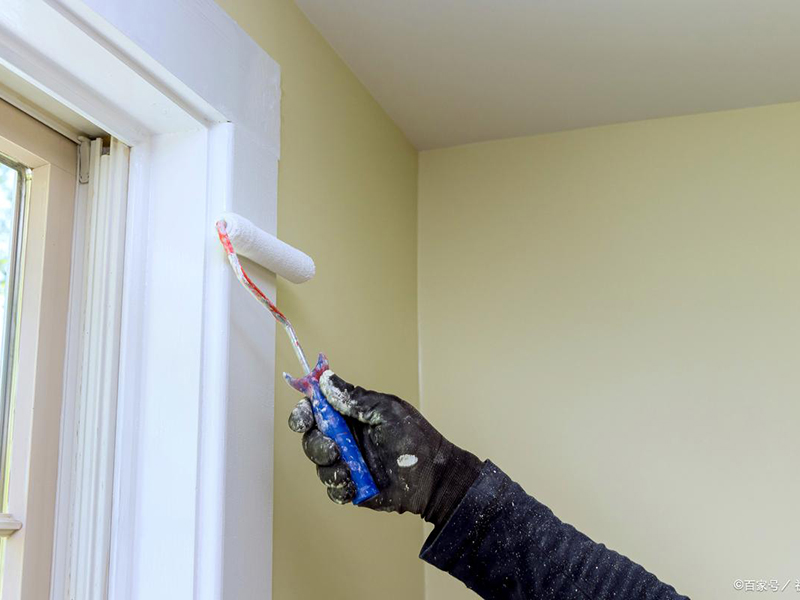
1.1 Concept of water-based coatings
With the continuous development of science and technology, researchers have developed various types of water-based coatings, which have made up for the shortcomings of traditional coatings. Waterborne coating is a type of water-based coating formed by using water as a dispersing medium. By categorizing water-based coatings based on the type of adhesive they contain, they can be classified into the following types: synthetic resin water-based coatings, such as acrylic resin; Natural water-based coatings, such as potassium silicate.
1.2 Advantages of water-based coatings
1.2.1 Strong security
As the name suggests, water-based coatings use water as a diluent, which does not pose a risk of flammability or explosion. They have high safety during transportation and production, and do not threaten the safety of relevant personnel’s lives and property. Therefore, it can be seen that water-based coatings have high safety.
1.2.2 Has strong practicality
Due to the special film-forming method of water-based coatings, they have certain advantages in terms of ductility, breathability, and yellowing resistance. Moreover, they have a very good hand feel, strong adhesion, and no cracking or peeling when applied
Due to the issue of falling off, the aesthetics of the product have been greatly improved, indicating that this material has strong practicality.
1.2.3 Strong environmental friendliness
Waterborne coating is a type of coating that mainly uses water as a diluent. In the coating, most of the raw materials are water, and there is no need to add toxic and harmful substances such as formaldehyde and lead during the production of the material. It can minimize the harm to the human body during use. Therefore, it can be seen that water-based materials have strong environmental protection.
1.3 Types of water-based coatings
1.3.1 Water based epoxy resin coating
Waterborne epoxy resin coating mainly uses epoxy resin as raw material and evenly disperses it in water to form a water-based epoxy resin coating. Due to the absence of organic solvents and very low content of organic compounds, this water-based coating has the advantages of being green and environmentally friendly. In terms of use, it has the advantages of convenient construction and strong solidification, and can be applied simultaneously with other water-based polymer objects, with relatively high economic value.
1.3.2 Waterborne polyurethane coating
Waterborne polyurethane coatings mainly use polyurethane as raw material. Generally, the molecular structure of polyurethane contains trace amounts of urethane chain polymer, which can not only improve the adhesion of molecules, but also flexibly adjust the molecular structure. Compared to latex coatings, water-based polyurethane coatings have outstanding low-temperature film-forming performance and can be well adsorbed on various plastic products, with strong durability.
1.3.3 Water based acrylic ester coating
Water based acrylic ester coatings mainly consist of acrylic acid, methyl acrylic acid, ethylene based monomers, etc
To improve the thermoplastic and color and gloss retention properties of water-based acrylic coatings as raw materials.
1.4 Formulation of water-based coatings
In the production of latex coatings, synthetic resin lotion is mainly used as film former. The waterborne coatings mainly use inorganic macromolecule waterborne resin, waterborne epoxy resin, water-soluble resin, etc. as film-forming materials. After the waterborne coatings are film-formed, they will be in the state of emulsified lotion. In general, water-based coatings mainly utilize the intermolecular forces between polymer particles generated by the evaporation of water during the film-forming process to form cross-linking. Therefore, water-based coatings emit very little VOC and other substances, making them a green and environmentally friendly material that not only does not pollute the ecological environment, but also does not pose a threat to human health.
2. Application of chemical formula for water-based coatings
Currently, in some Western countries, water-based coatings are widely promoted and applied in construction, wooden products, metal objects, and plastic products. However, in China, although water-based coatings have achieved certain development, they have not been widely promoted and applied due to their high cost and unsatisfactory decorative effect. Only a small number of enterprises have applied water-based coatings, as follows:
2.1 Application of water-based coatings in automotive painting
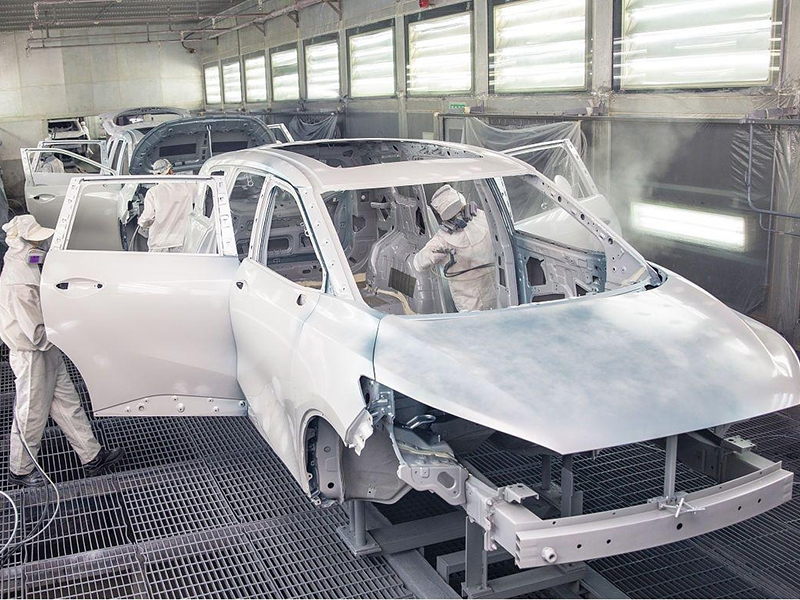
At present, only a few large enterprises in China’s automobile manufacturing industry apply water-based coatings to automotive painting. In developed Western countries, water-based coatings account for 20% of automotive coatings. At present, according to incomplete statistics, the annual production of water-based coatings has reached over 8 million tons, of which the sales volume in the automotive manufacturing industry is more than 1000 tons, and it is growing year by year. In the future, its proportion in the automotive manufacturing industry will be even higher.
2.2 Application of water-based coatings in elevator painting
Most elevator manufacturers in our country use powder coating to manufacture elevators, which has the advantages of low cost and high environmental performance. However, due to the difficulty of color change and significant limitations in decorative effects. With the emergence of water-based coatings, some elevator manufacturers have applied them in elevator coating. The commonly used coating method is water-based electrostatic coating, which mainly uses organic solutions instead of pure water. This not only minimizes production costs but also makes the entire coating process more environmentally friendly.
2.3 Application of water-based coatings in wooden products
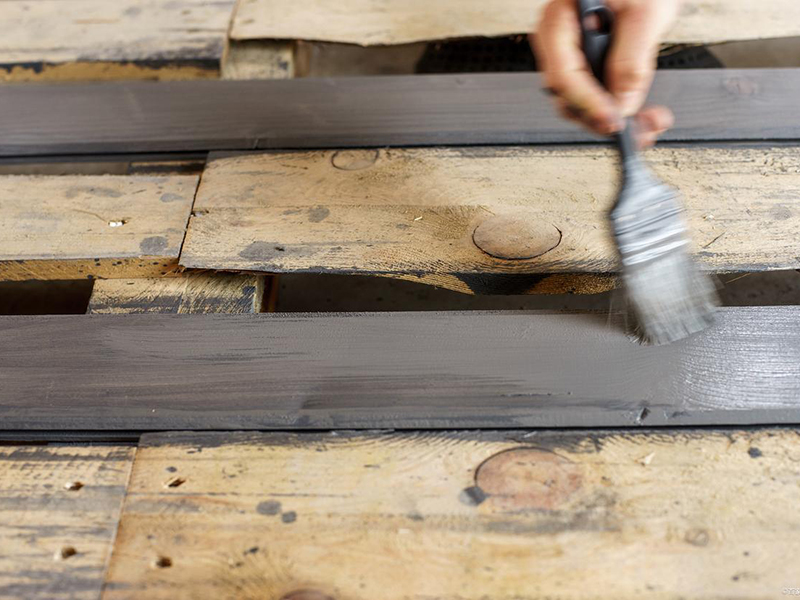
At present, with the continuous increase in annual production of water-based coatings, major enterprises have begun to apply water-based coatings in the production of wood products. There are three commonly used water-based coatings, namely single component, two-component, and water-based UV paint. Among them, single component water-based coatings are mainly diluted directly with water. Due to their high environmental friendliness and safety, they are commonly used for coating wooden wardrobes, beds, tables and chairs, children’s furniture, etc; Two component water-based paint is mainly formed using curing agents, and its environmental friendliness is much lower than that of single component water-based paint. However, it can greatly improve the hardness and glossiness of the paint film for home use; Water based UV paint is mainly formed using ultraviolet light technology, which can improve the firmness and hardness of the paint film. However, due to its special film-forming method, it is only suitable for large-scale mechanical production industries and is therefore only applied in the coating of wooden doors.
The importance and development prospects of chemical formula application in water-based coatings
3.1 Importance
Due to its strong water solubility, water-based coatings have significant differences from ordinary coatings. Water is a very important material basis in daily life, and people’s lives cannot do without water. The biggest feature of water-based coatings is that they have properties similar to water, but their true function is to minimize the content of organic solvents in the coating. With mature technology, they can completely replace organic solvents. In traditional coatings, organic solvents are an important component. Due to the large amount of toxic and harmful substances contained in organic solvents, they not only pollute the ecological environment but also threaten people’s health. The emergence of water-based coatings, due to their low toxicity, can minimize the harm to practitioners in the coating industry while reducing environmental pollution. In addition, compared to traditional coatings, water-based coatings have stronger economy and practicality. Generally, traditional coatings contain a large amount of organic solvents, which are highly susceptible to the impact of oil prices; The content of organic solvents in water-based coatings is very low, and some water-based coatings even do not contain organic solvents, so they also have significant advantages in manufacturing costs. Compared to traditional coatings, water-based coatings make up for the high manufacturing costs of traditional coatings due to their high content of organic solvents, which are easily affected by oil prices. This gives companies a significant competitive advantage in the economic market.
3.2 Development prospects of water-based coatings
With the continuous development of the social economy, China has made great progress in science and technology. Relevant personnel have successively researched different types of water-based coatings, creating new development opportunities for China’s coating industry. However, due to the fact that water-based coatings belong to a new technology and formula, they have not been widely promoted and used in China’s industrial and other fields. Through analysis of the reasons, it is found that there are several factors that affect the development of water-based coatings, including development prices, technical conditions, laws and regulations, etc. At present, in developed Western countries, water-based coatings account for 80% of the market share, but in China, water-based coatings only account for 40% of the market share. Therefore, it can be seen that there are still many problems in the development of water-based coatings in China. However, due to the lack of emphasis on environmental protection in the early stages of economic development in our country, environmental pollution has become a serious problem, hindering the sustainable development of our social economy. In order to effectively protect the environment, China has successively introduced a series of environmental protection policies, and the emergence of water-based coatings coincides with these policies, creating opportunities for their development. In the future, water-based coatings will be an inevitable trend in the development of the times. At the same time, traditional coatings require the support of petroleum energy in the manufacturing process. However, as petroleum is a non renewable resource, the price of petroleum has been rising year by year in the context of increasingly scarce petroleum resources, leading to soaring prices of petroleum related products. The emergence of water-based coatings has solved the problems faced by the coating industry. Therefore, it can be seen that water-based coatings are an inevitable trend for future development.
Closing remarks
Coatings are a type of decorative material that can enhance the hardness and aesthetics of products when applied in various manufacturing industries. However, due to the presence of various toxic and harmful substances in traditional coatings, as well as high manufacturing costs, it affects the development of the coatings industry. With the continuous development of the social economy and significant advances in science and technology, researchers have developed a water-based coating that perfectly compensates for the shortcomings of traditional coatings and lays the foundation for the sustainable development of the coatings industry.
Post time: Aug-03-2026